The problem
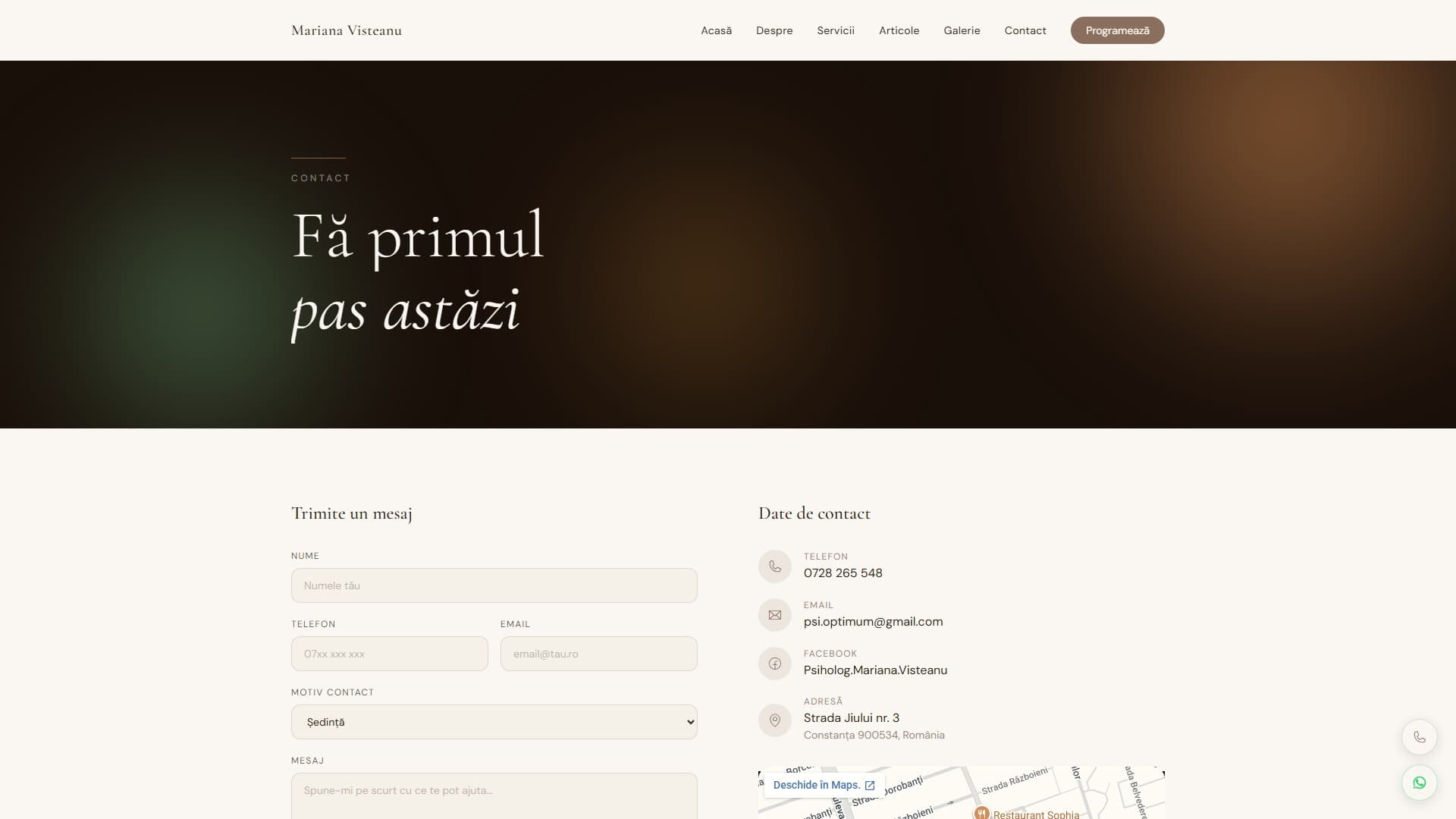
The old site was a dated WordPress template: classic fonts, cold and dull colours, no hero, no personality. It was slow and didn't show up on Google. The contact form looked like it worked, but it sent nothing — no notification ever reached the practice, so booking requests made through the site just vanished. For a practice that lives on appointments, that means patients lost in silence.
The approach
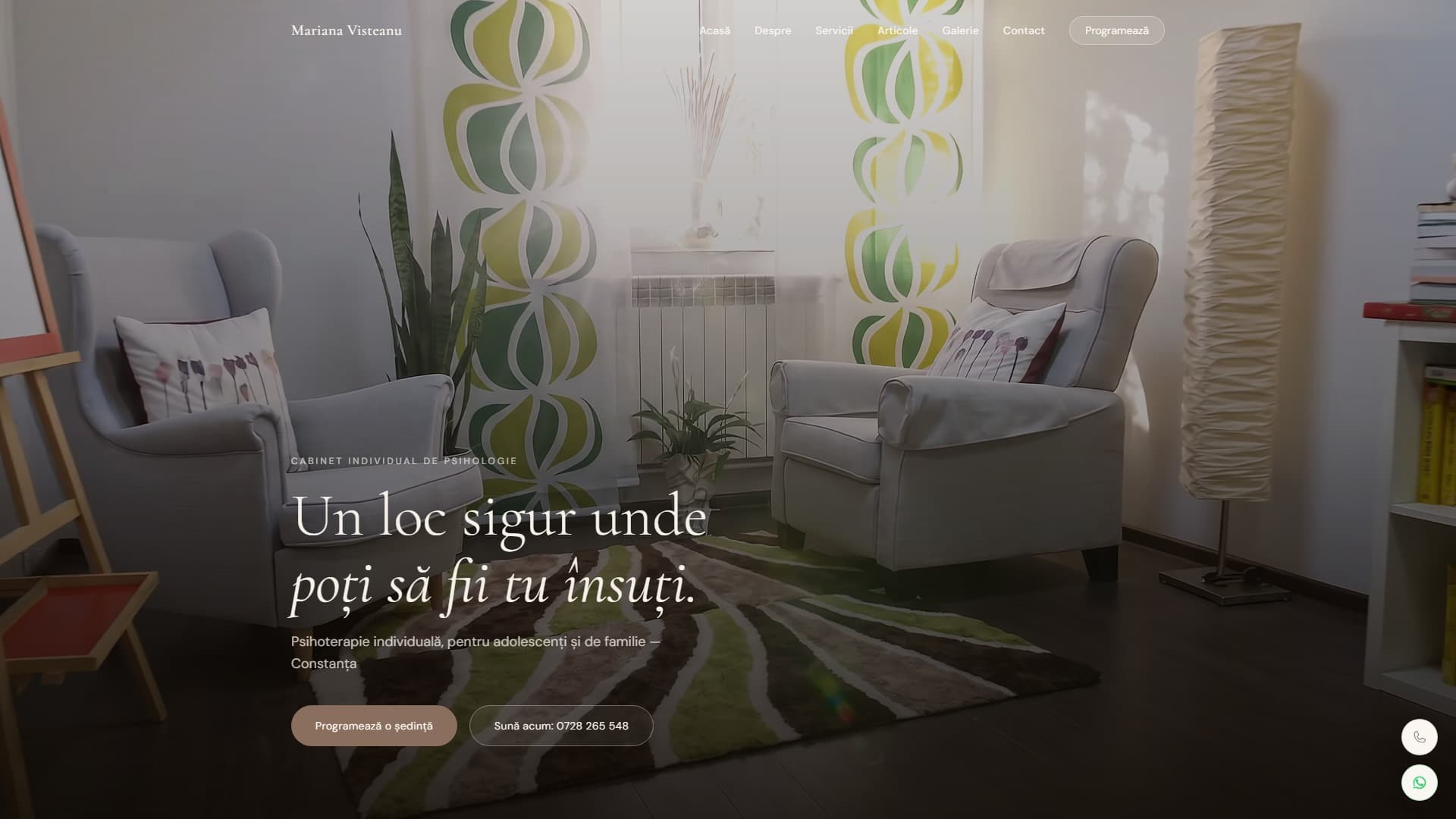
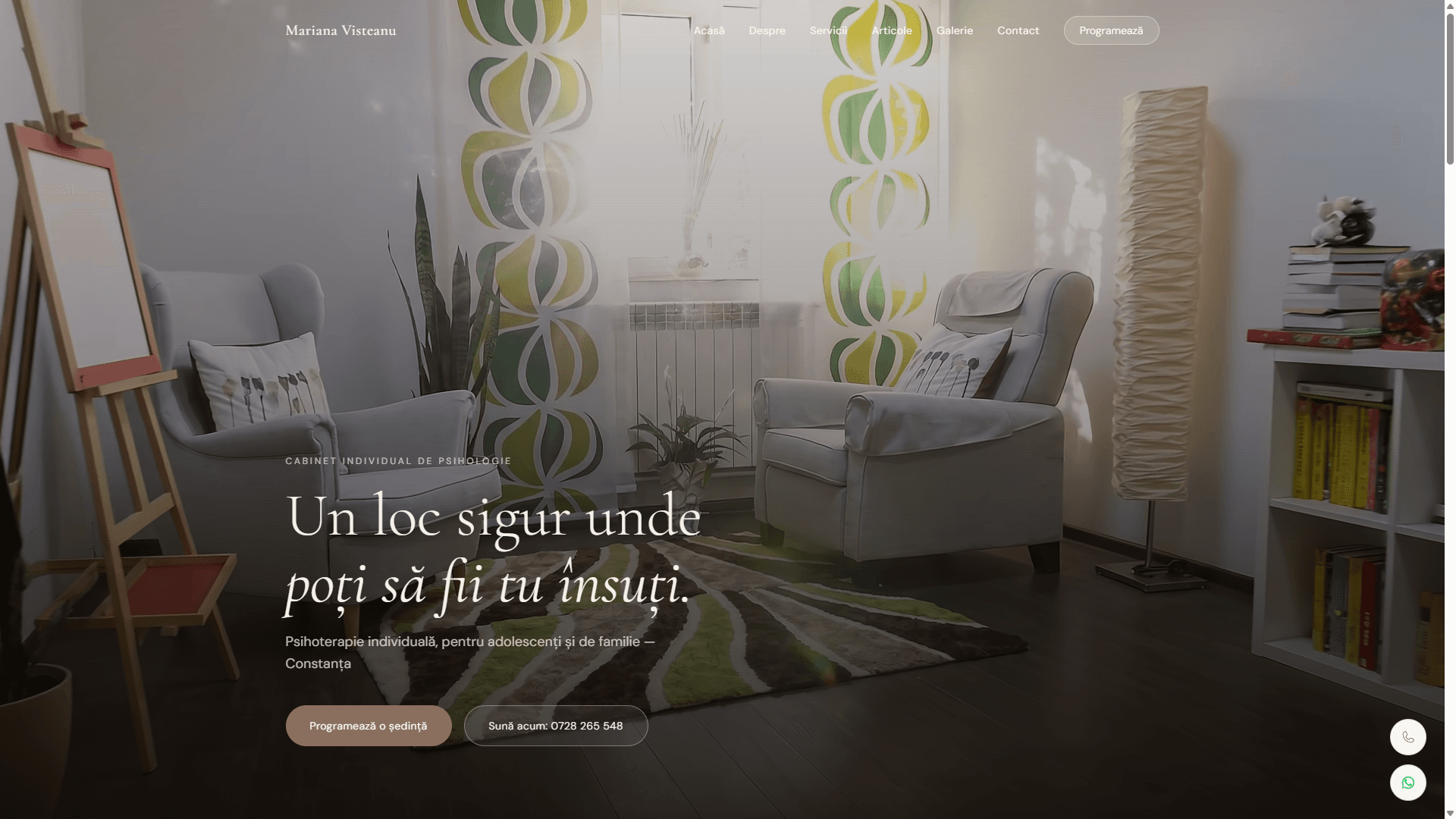
We rebuilt the site from scratch instead of patching it. We dropped the old WordPress and moved everything to Next.js 16 on Vercel, built an email system that actually delivers (the practice had none before), added a hero video where there was nothing, and fixed SEO at the foundation.
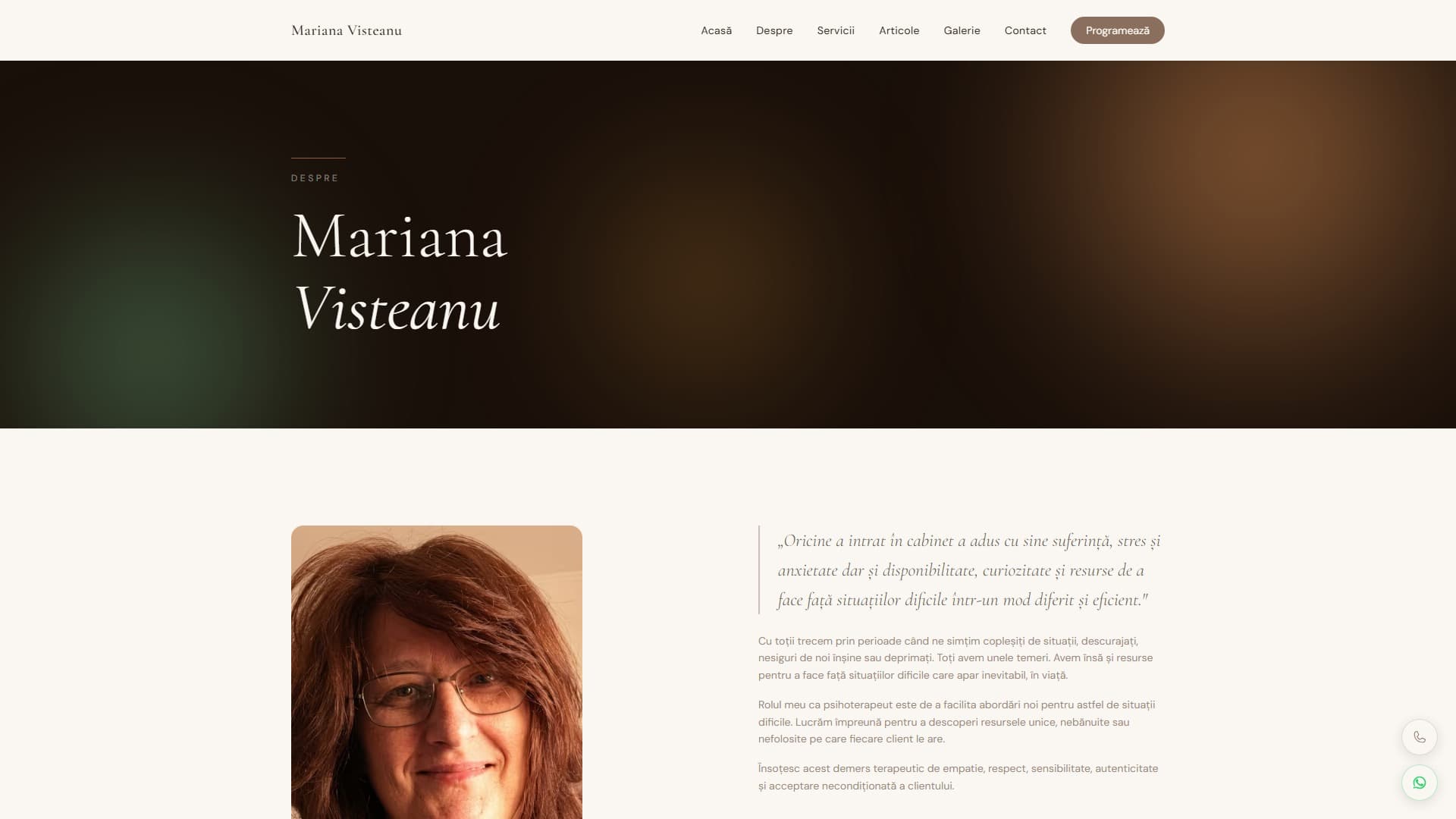
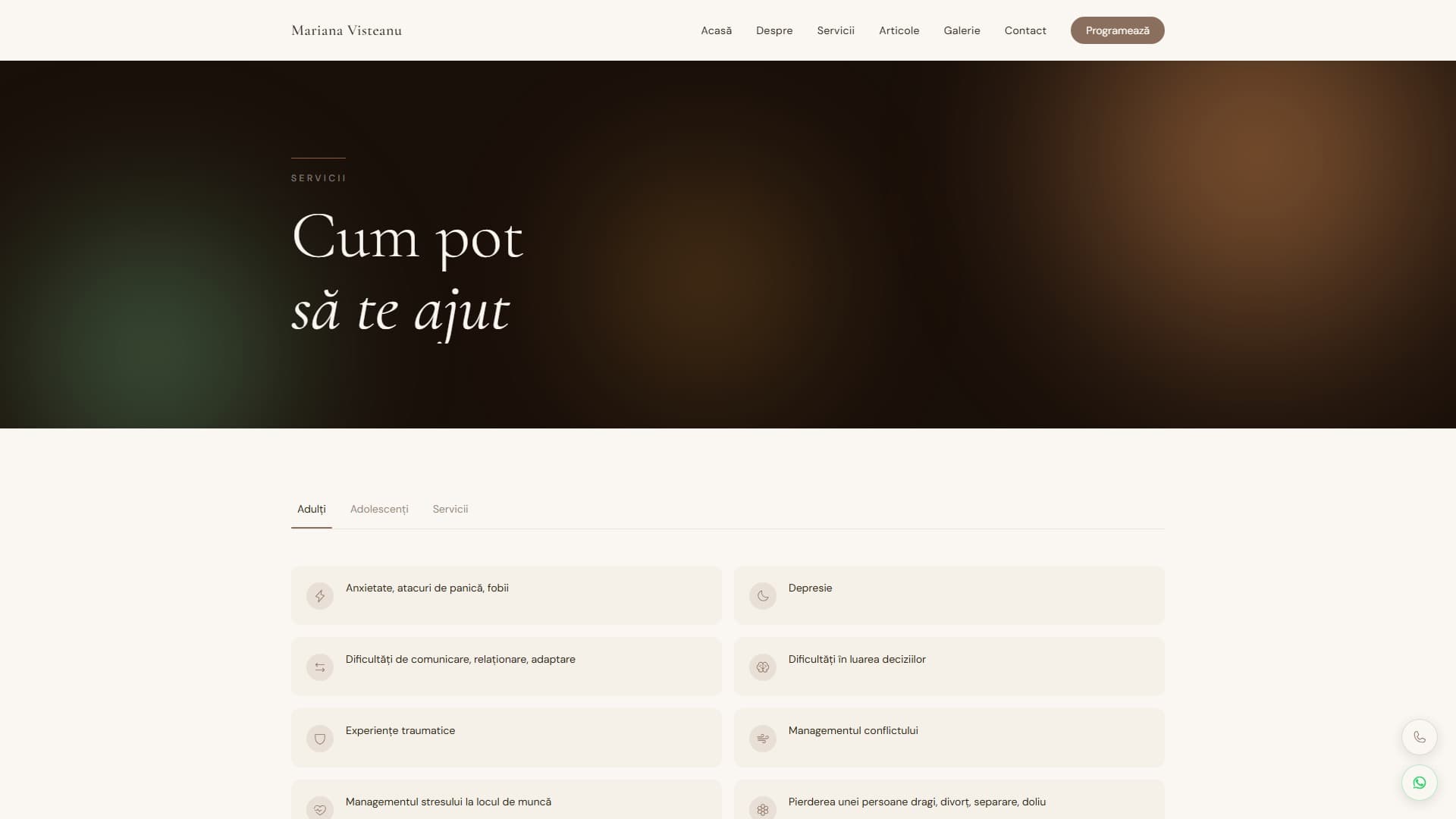
Beyond the technical side, we worked on how the site feels. The old template threw patients into cold colours and stiff fonts. Instead, we chose a warm palette and wording discussed with the client word by word, fitting for a psychology practice. The goal was simple: someone landing on the site should feel welcomed, not hit by a cold wall of information.
For a psychology practice, tone matters as much as speed. The old template dropped patients into cold colours and stiff fonts. Now, the warm palette and every line on the site were chosen carefully, together with the client, so patients feel trust and calm from the first second. No filler text. Every sentence has a job: to welcome the person, not overwhelm them.
The technical solution
The result
Indexed in Google Search Console within days of launch, and listed on Bing too. The contact form delivers booking requests straight to the inbox, with no errors — something that never happened before. DNS was moved with zero downtime and no broken redirects. In place of the old WordPress template, patients now land on a site that's fast, warm, clear, and speaks their language.